

What is a good plank time by age? Nobody knows, because no published study gives measured plank norms by age band for adults over 50. The charts you see online are mostly unsourced and all contradict each other.
I went looking for a clean table of plank times by decade. What I found was a gap in the research with a lot of confident formatting on top of it.
So this is a different kind of article. It shows the real numbers that exist, the shaky ones that circulate, and how to use the plank sensibly without a chart.
Key Takeaways
- In 471 college students, men held a forearm plank for 124 seconds on average and women for 83 (Strand et al., 2014).
- In 120 adults, 60 aged 20 to 35 and 60 aged 60 to 79, the overall mean was 145.3 seconds, and younger adults held significantly longer (Bohannon et al., 2018).
- That abstract does not report each age group’s average, so no clean number for 60 to 79 exists in what I could read.
- Two articles from one outlet disagree: one says adults over 60 mostly hold 20 to 45 seconds; another calls 60 to 89 seconds average.
- Test-retest reliability looks good: 108 vs 111 seconds in one sample, and a 0.915 correlation in another.
- Best use: track your own time under the same conditions.
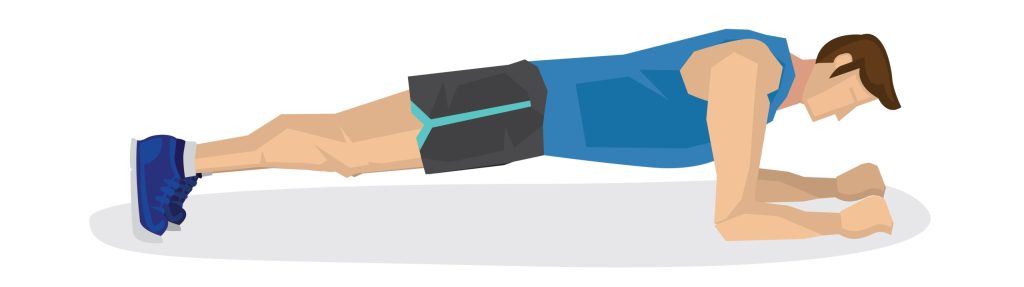
What Does Research Say About Plank Time by Age?
Not much, and almost none of it covers people past 50. Here is every measured set of plank times I could verify.
| Study | Who | Measured hold time |
|---|---|---|
| Strand, 2014 | 471 college students, average age about 20 | Men 124 ± 72 s; women 83 ± 63 s |
| Bohannon, 2018 | 60 adults aged 20 to 35 and 60 adults aged 60 to 79 | Overall mean 145.3 ± 71.5 s; younger held longer (p = 0.003); group means not in the abstract |
| Linfield College sample | 33 undergraduates | 108 s, then 111 s in a second session |
| Indian college sample | Healthy college-aged adults | Men 97 ± 49 s; women 51 ± 36 s |
So, only one study tests older adults. Everything else is people in their early twenties.
Confidence level: medium for the college figures, low for anything about over-50s. The Strand sample is large, but it is young. The Bohannon abstract confirms the direction of the age effect without its size.
Why Do Online Plank Charts Disagree?
Because they are not measuring anything. I looked at two articles from the same outlet. One quotes a physical therapist saying most healthy adults over 60 hold a stable forearm plank for roughly 20 to 45 seconds, with men in their 60s at 25 to 45 and people in their 80s at roughly 5 to 20 (Eat This).
A second piece from the same site ranks 60 to 89 seconds as average and two minutes or more as elite for people over 60 (Eat This). The two cannot both describe the same people.
Top End Sports publishes a rating scale from under 15 seconds to over 6 minutes and calls it a rough guide (Top End Sports).
Here is a back-of-envelope check, flagged as my own reasoning. Bohannon’s groups were the same size, so the two group averages must average to 145.3. If the older group averaged 45 seconds, the younger group would need to average about 246.
That is double what the college students managed in Strand’s test, although the protocols differ. It suggests the “typical 20 to 45 seconds” figures are too low for healthy adults who volunteer for a fitness test, not that I know the true number.
Confidence level: low. Different tests, different samples, and an abstract-only source. Treat my inference as a reason to distrust the charts, not as a replacement for them.
Is the Plank a Reliable Test of Core Strength After 50?
It is reliable in the narrow sense that your time repeats. The Linfield sample held 108 seconds and then 111 in a second session. The Bohannon team reported a test-retest correlation of 0.915 between sessions.
That makes your own trend a meaningful measure, even if the population chart is missing. Activity matters too: in Strand’s data, training more than three times a week was linked to longer holds, and over five times a week showed the largest effect.
What it measures is trunk endurance. In Strand’s sample, abdominal fatigue was the stopping reason linked to the shortest holds. That is not the same as being strong at lifting, balancing or getting off the floor.
In the mixed-age study, plank time was also linked to being more physically active and to a lower BMI and waist circumference.
How Should You Use the Plank After 50?
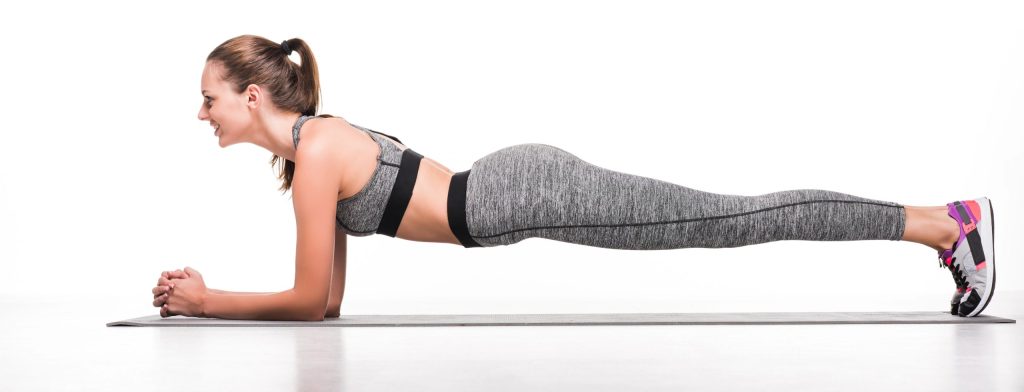
This is my practical take, not trial-tested advice. Do a forearm plank with your body in a straight line, stop when your hips sag, and write the time down. Repeat monthly under the same conditions.
What a Good Forearm Plank Looks Like
- Head: eyes on the floor a little ahead of your hands, neck in line with your spine.
- Elbows: directly under your shoulders, forearms flat on the floor.
- Trunk: squeeze your glutes and brace your abs so hips stay level with shoulders and heels, not sagging or piking.
- Legs: straight, weight on your toes, feet about hip width apart.
Breathe normally. If your hips start to sag, the test is over.
Ignore the age chart and watch the trend. If your time rises, your trunk endurance is improving. If it falls, check sleep, recent illness and whether you have stopped training.
Stop if you feel pain in your shoulders, wrists or back. If you have heart or blood pressure problems, ask your doctor before testing yourself to exhaustion.
The plank is a decent addition, not the whole program. My guides to strength training after 50, men over 50 and women over 50 cover the foundation, and balance exercises for seniors covers the part a plank does not.
For benchmarks that do have real data, see VO2 max by age and body fat percentage by age. If belly fat is the worry, this plan comes first. Set up space with a home gym after 50, and add some daily walking.
The wider theme is in basics beating biohacks: a stopwatch and a floor will do.
It is also worth remembering what a plank leaves out. Holding still for a minute says little about how well you carry shopping, climb stairs or get up from the floor, and none of the studies above link plank time to those outcomes.
What Would Real Plank Norms Need?
A decent sample in each decade from 50 to 80, a defined test (forearm or hands, how form breaks count), reported by sex, and published numbers rather than a chart. That is a small study by research standards. Someone should do it.
Until then, if a chart tells you exactly how long a 67-year-old woman should plank, ask where the numbers came from.
Common Questions
What is a good plank time by age?
No one has published reliable plank norms by age for adults over 50. The studies I found measured college students, or a mixed group of 120 adults aged 20 to 35 and 60 to 79 whose combined average was about 145 seconds. Online age charts do not cite measured data.
How long should a 60-year-old hold a plank?
There is no evidence-based target. Two articles from one outlet give different answers: one says most healthy adults over 60 hold 20 to 45 seconds, the other ranks 60 to 89 seconds as average. Track your own time with good form instead.
Do plank times drop with age?
Yes, the one study that compared age groups found younger adults (20 to 35) held significantly longer than older adults (60 to 79), with p = 0.003. The abstract does not report each group’s average, so I cannot give you the size of the gap.
Is the plank a reliable fitness test?
Reasonably. One small college sample held 108 seconds in one session and 111 in a second, and the mixed-age study found a test-retest correlation of 0.915. That suggests your own time is repeatable, which makes your personal trend meaningful.
How long can the average person hold a plank?
In 471 college students, men averaged about 124 seconds and women about 83. A smaller Indian college study reported about 97 seconds for men and 51 for women. These are young adults, so they overstate what to expect after 50.
Does a longer plank mean a stronger core?
It measures trunk endurance, not total core strength. In the college study, abdominal fatigue was the stopping reason linked to the shortest holds. Plank time was also linked to activity level, with more than three sessions a week making a difference.
What is the world record plank?
Top End Sports reports that a 62-year-old former US Marine held a plank for 8 hours, 15 minutes and 15 seconds in 2020. It is a fun fact, not a benchmark for everyone else.
How I Put This Together
I read the abstract and open-access excerpts of the Strand 2014 study, and the abstracts of the Bohannon 2018 prone bridge study, the Linfield College reliability sample and an Indian college norms paper. I read two articles from Eat This and a Top End Sports page to see how the charts are presented.
I couldn’t get the full text of Bohannon 2018, so I do not have its group-by-group means. The 246-second figure is my arithmetic from its reported overall mean and equal group sizes. Test protocols differ across the studies.
Confidence levels are my own judgment. This is information, not medical advice. Ask your doctor before pushing hard if you have a heart or blood pressure condition.
